The other day I let the famous deer and the Great Buddha of Nara be and headed to the north of the city where a pretty brick entrance gate had caught my attention earlier.
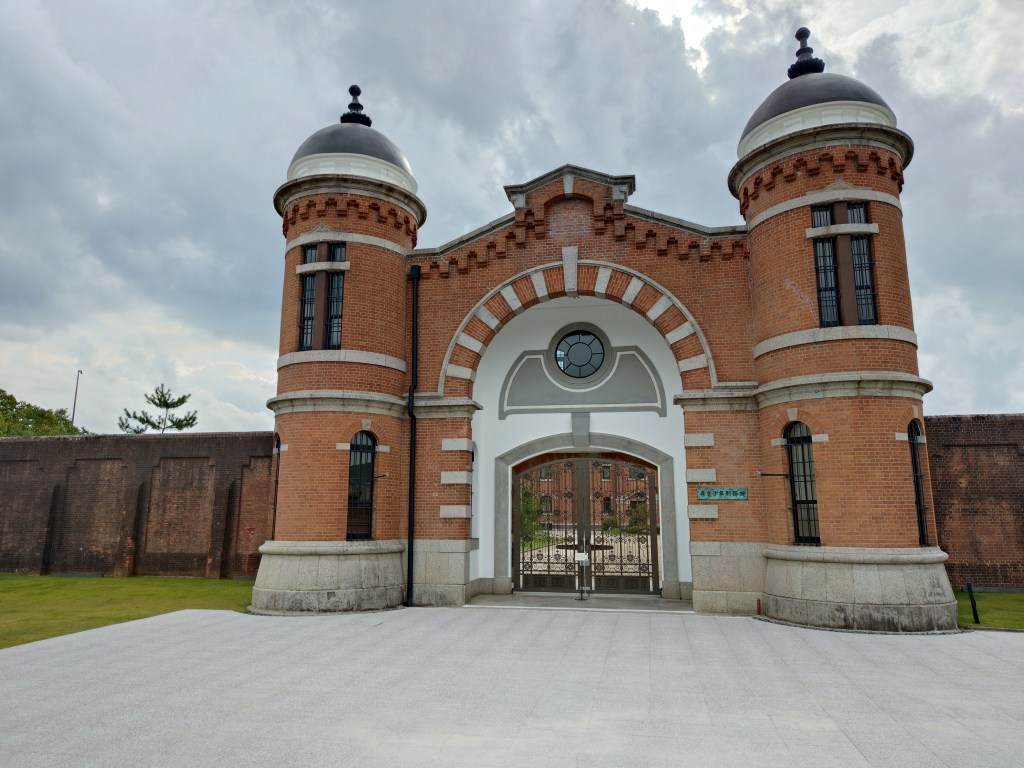
Astonishingly, this is the former Nara Juvenile Prison, in use from 1908 to 2017 and now turned into a Hotel and Museum.
As museum visitors, though, we entered through another gate.
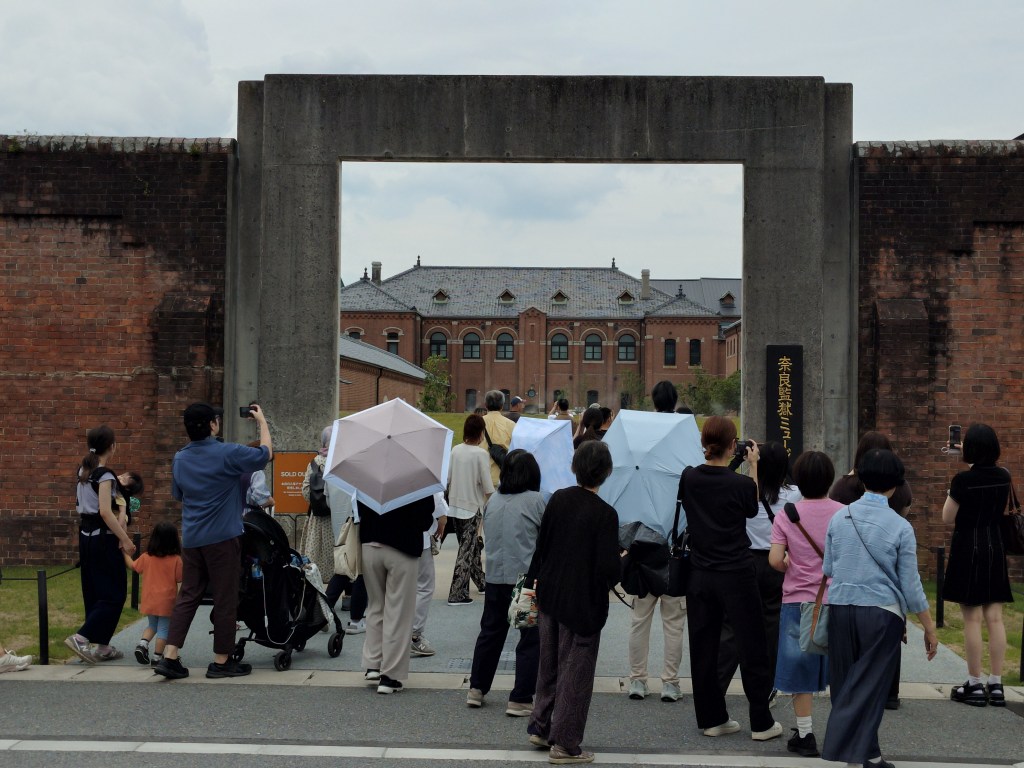
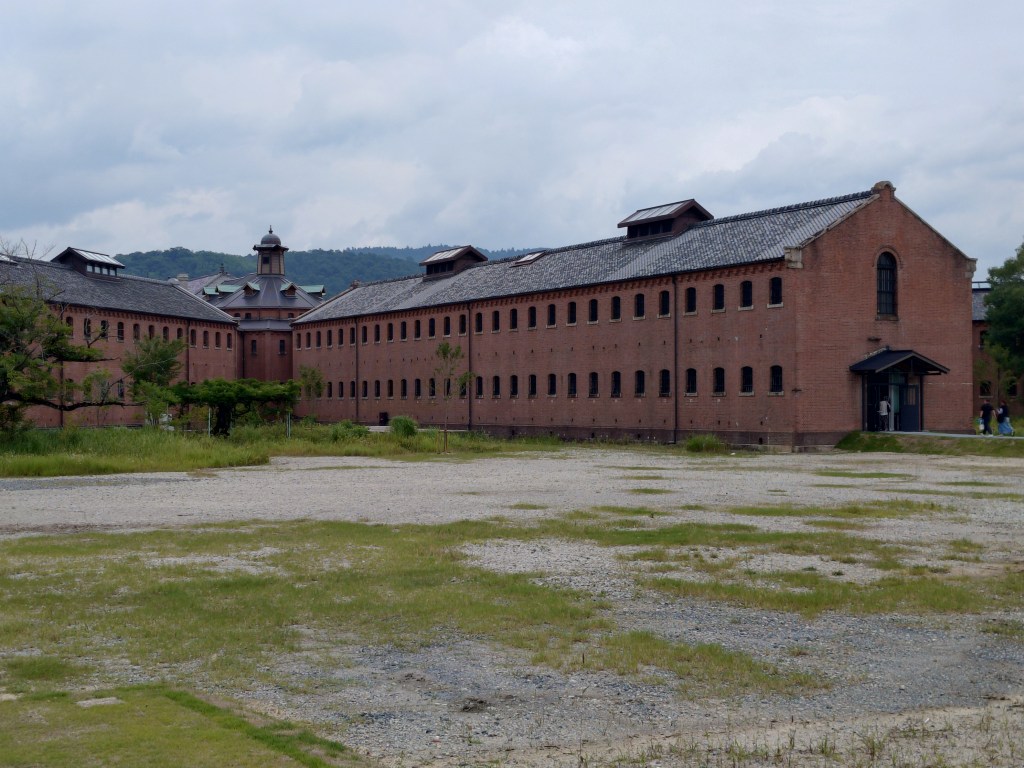
The vastness of the grounds was impressive, although there seem to have been additional buildings when the prison was in use.
The arrangement of the two-story cell blocks is also memorable, with the five blocks extending radially from a central guard station, the so-called Haviland system.
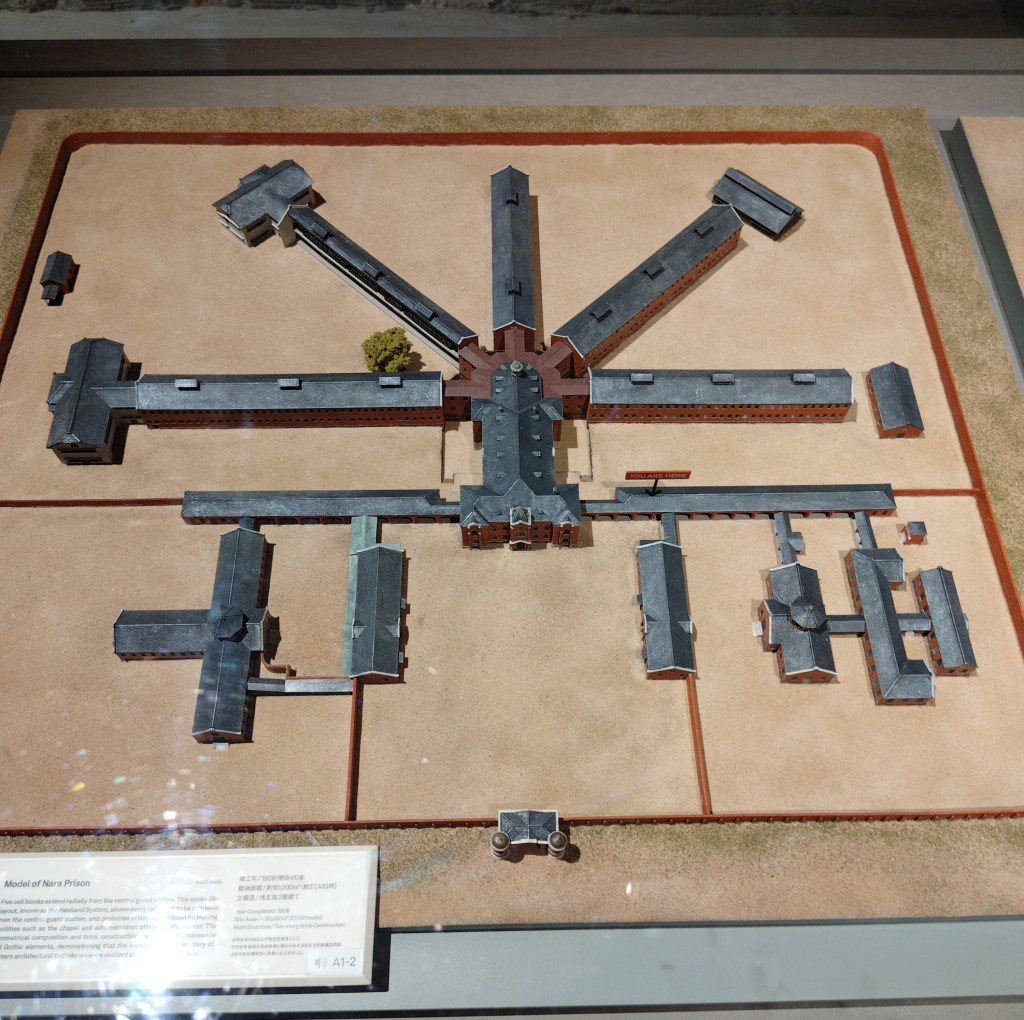
This way, all five blocks can be monitored from the slightly elevated guard station at once. (Unfortunately, we were not allowed into it.)
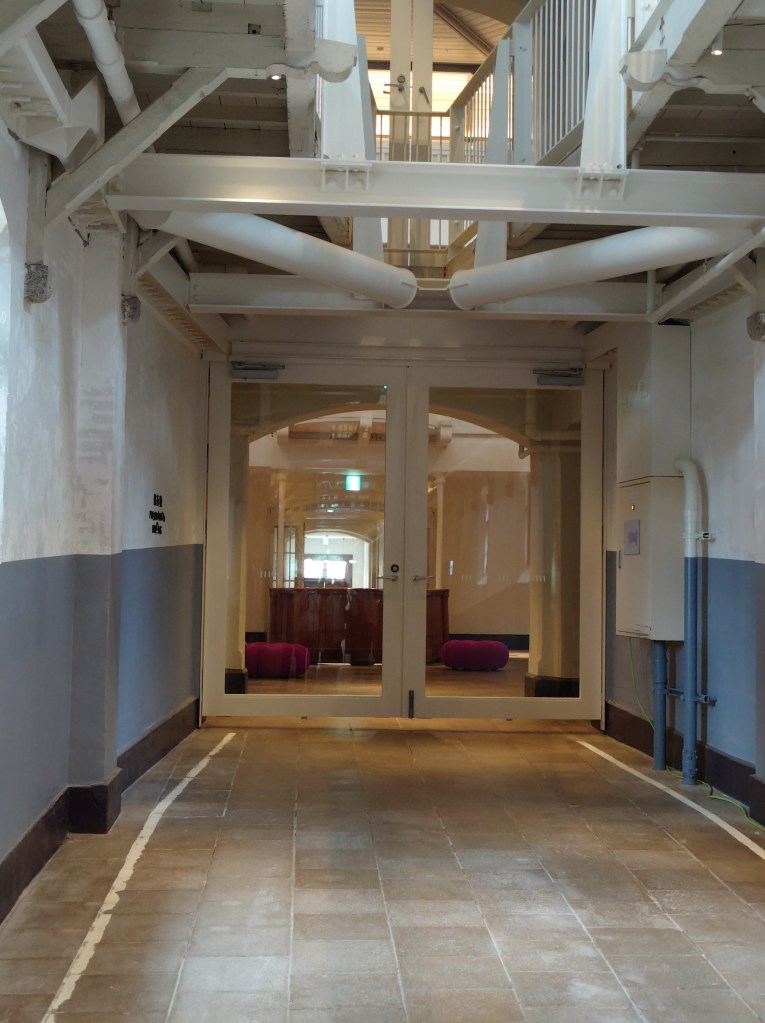
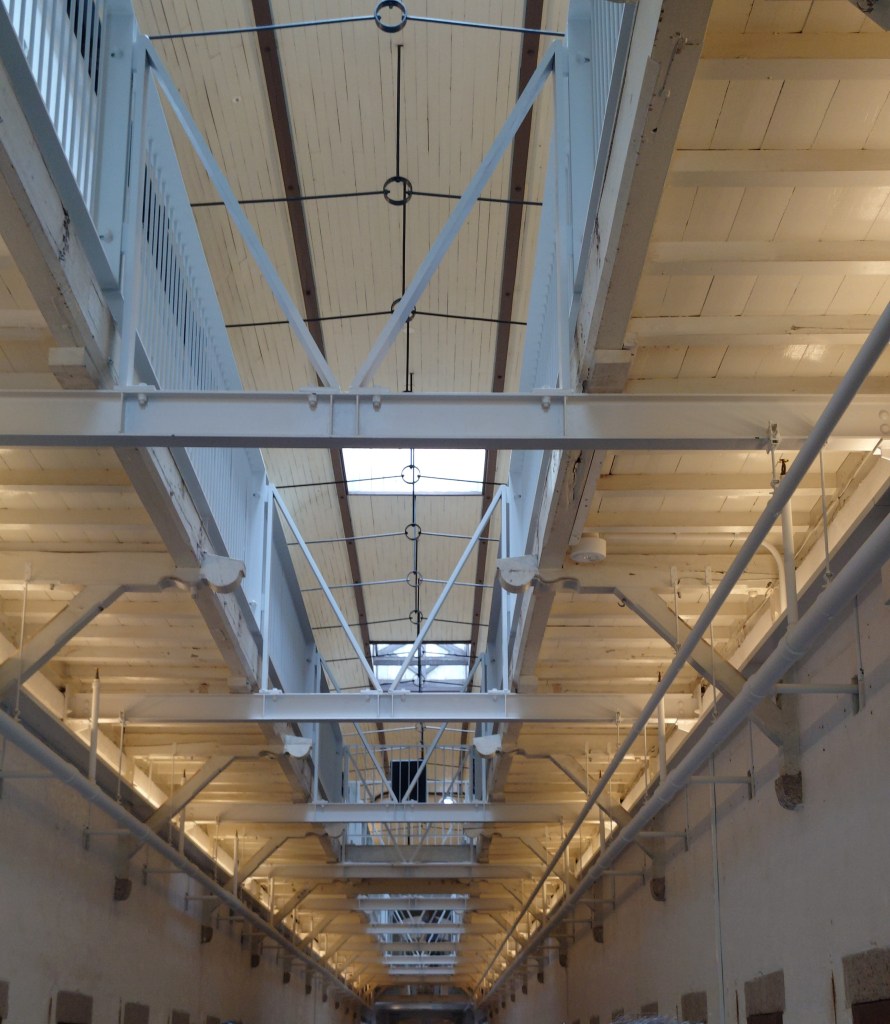
Skylights….
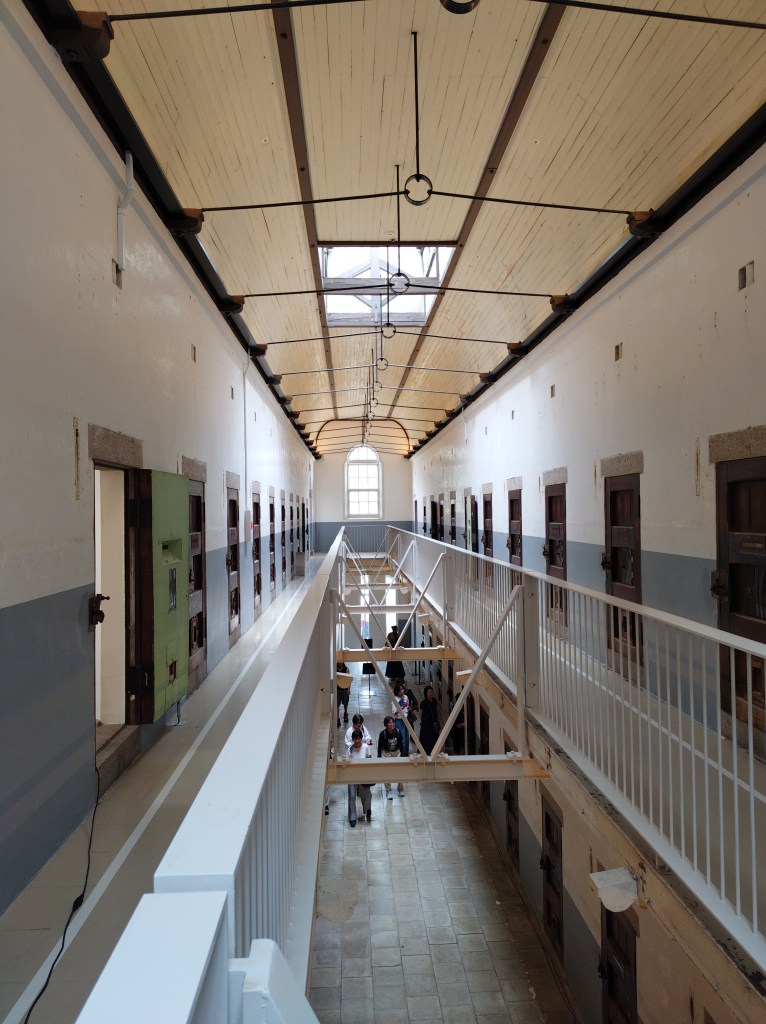
…. and an opening in the second-floor corridor allow natural light to filter through to both floors.
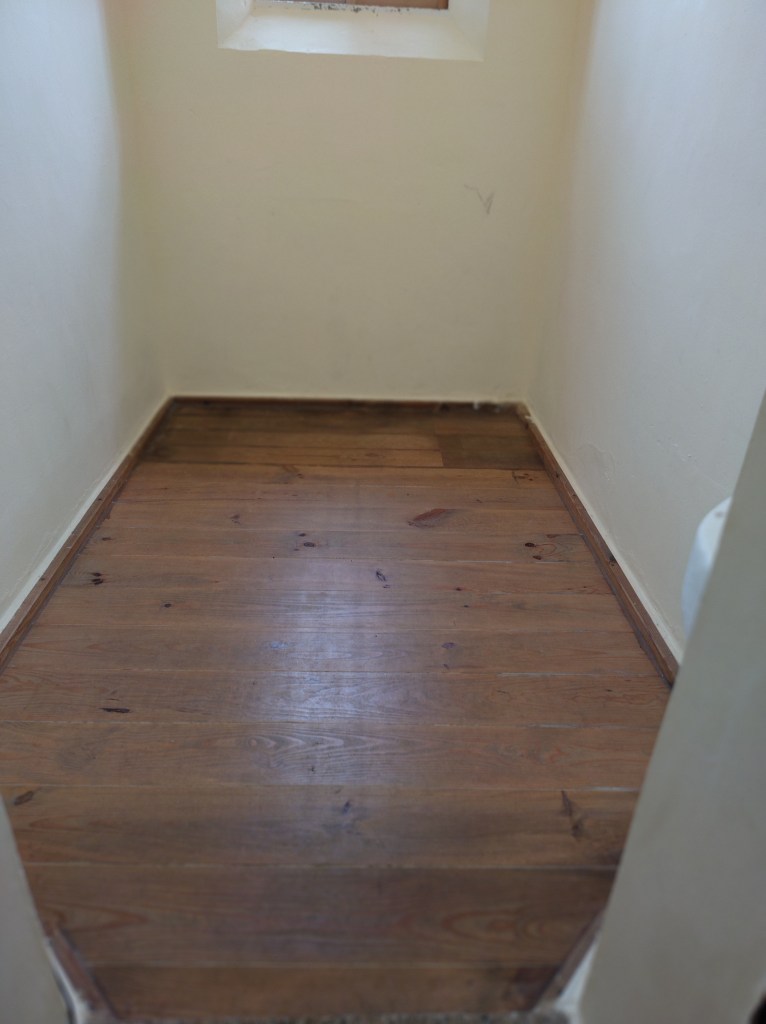
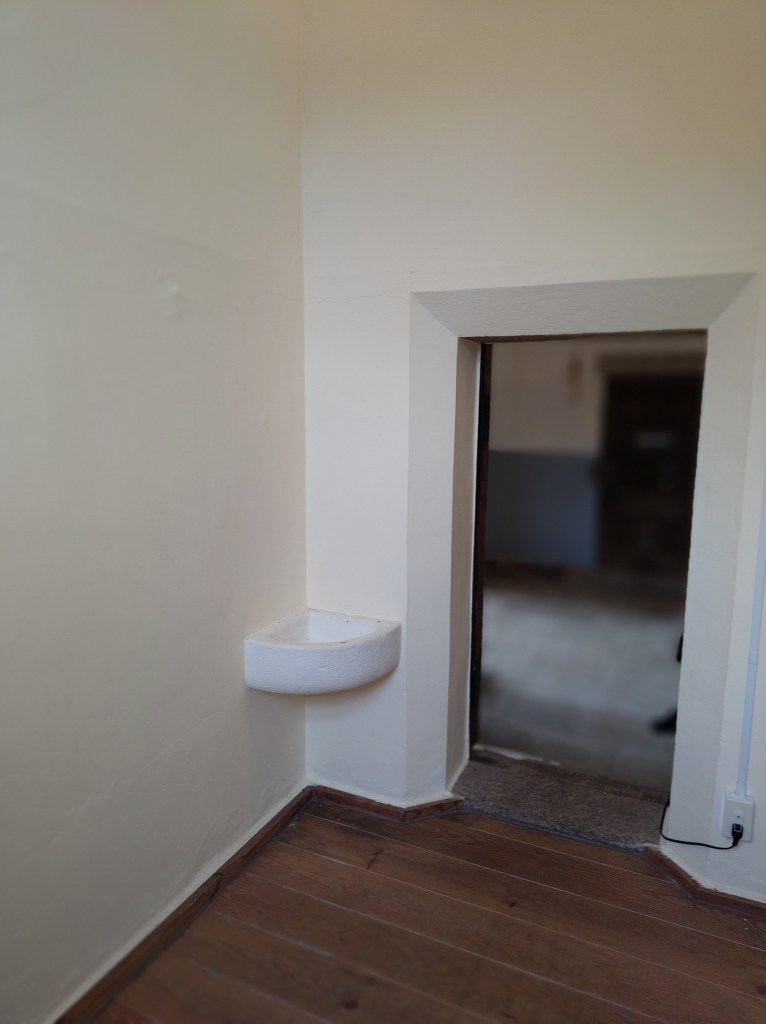
A single occupancy cell is 4,88 square meters…
….with nothing in it but a granite wash-basin.
Buckets served as toilets with the waste having to be carried out from each cell. Only later were flush toilets installed.
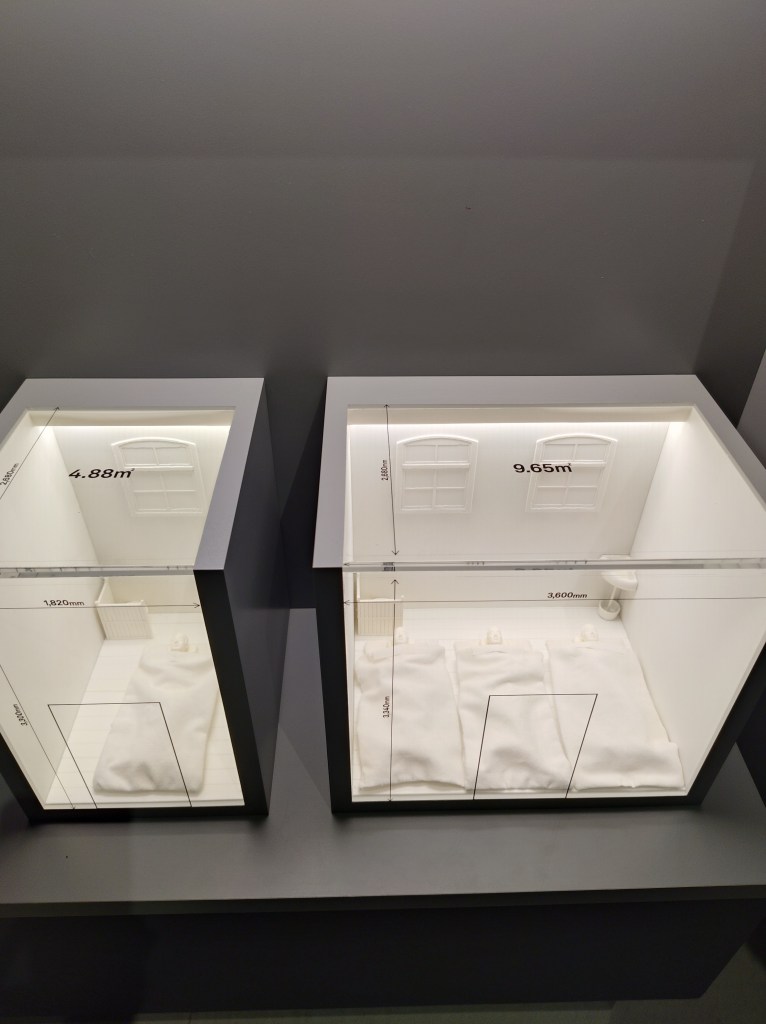
Of course Japanese style bedding had to be put on the floor at night.
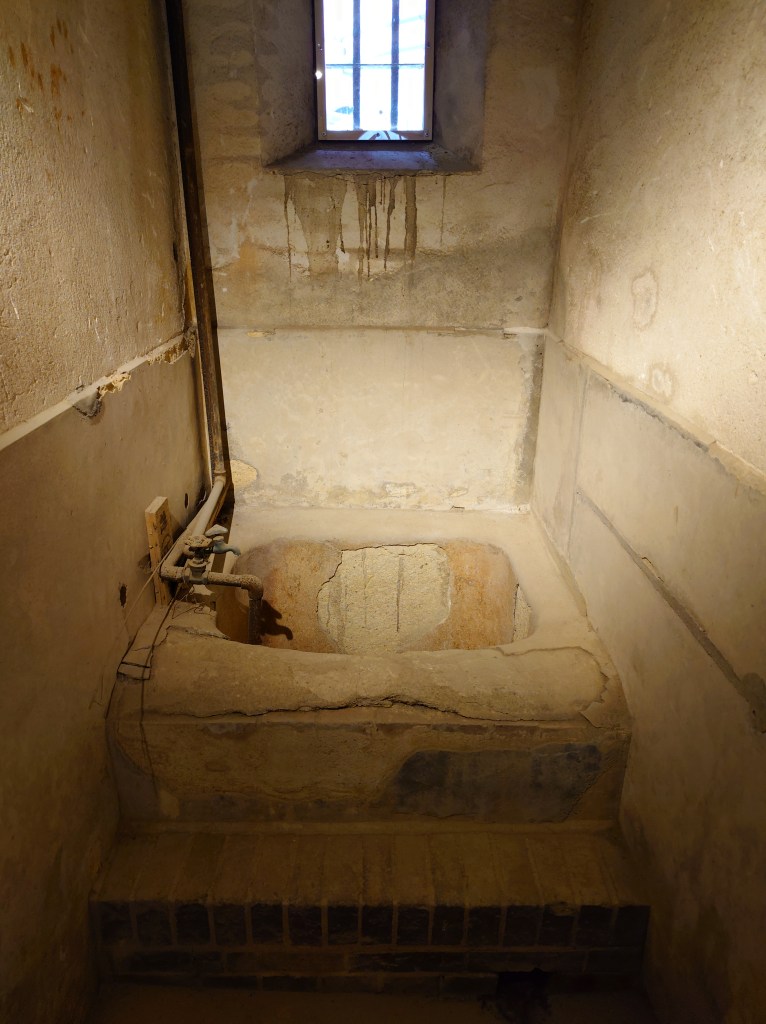
Baths don’t look too inviting, either, but it’s a big step forward from the 19th century, when there was no bathing available at all.
After walking through the actual prison block, there were several rooms with detailed exhibitions giving you an idea of what life was like in prison. Themes ranged from meals….
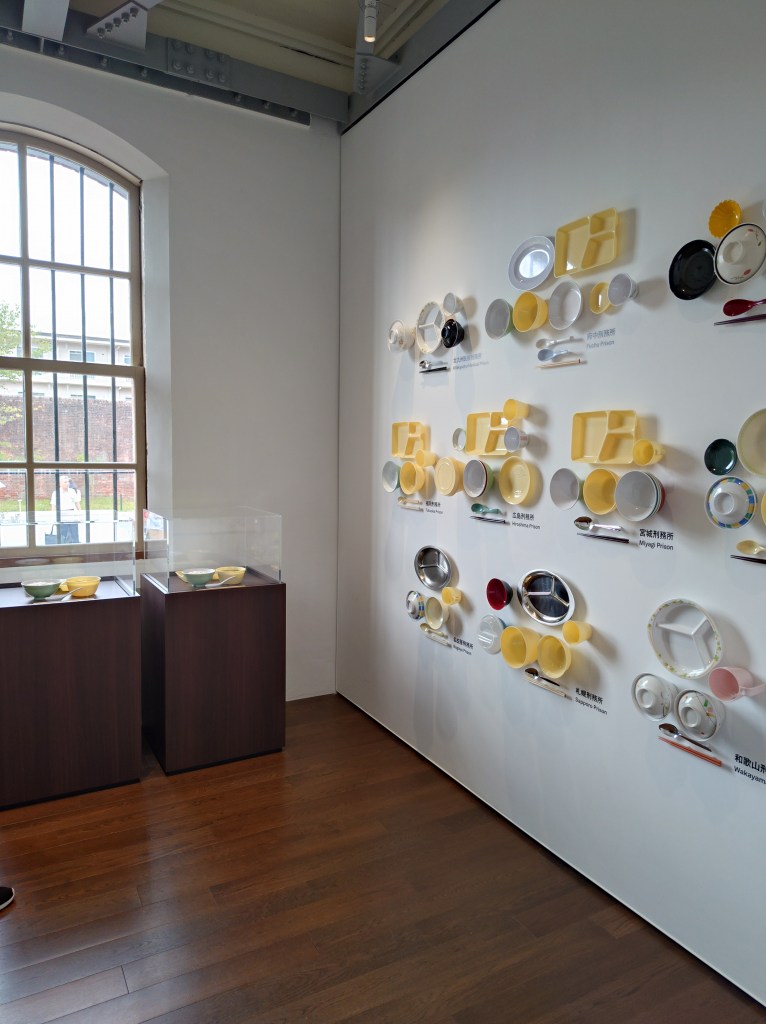
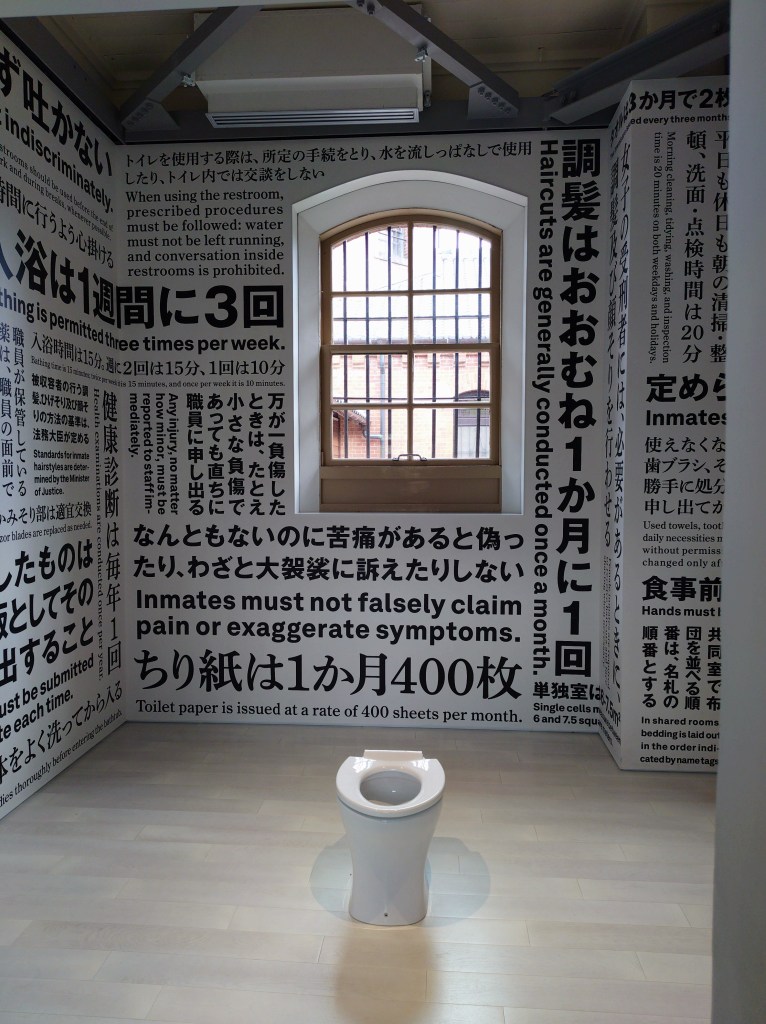
….to prison rules…..
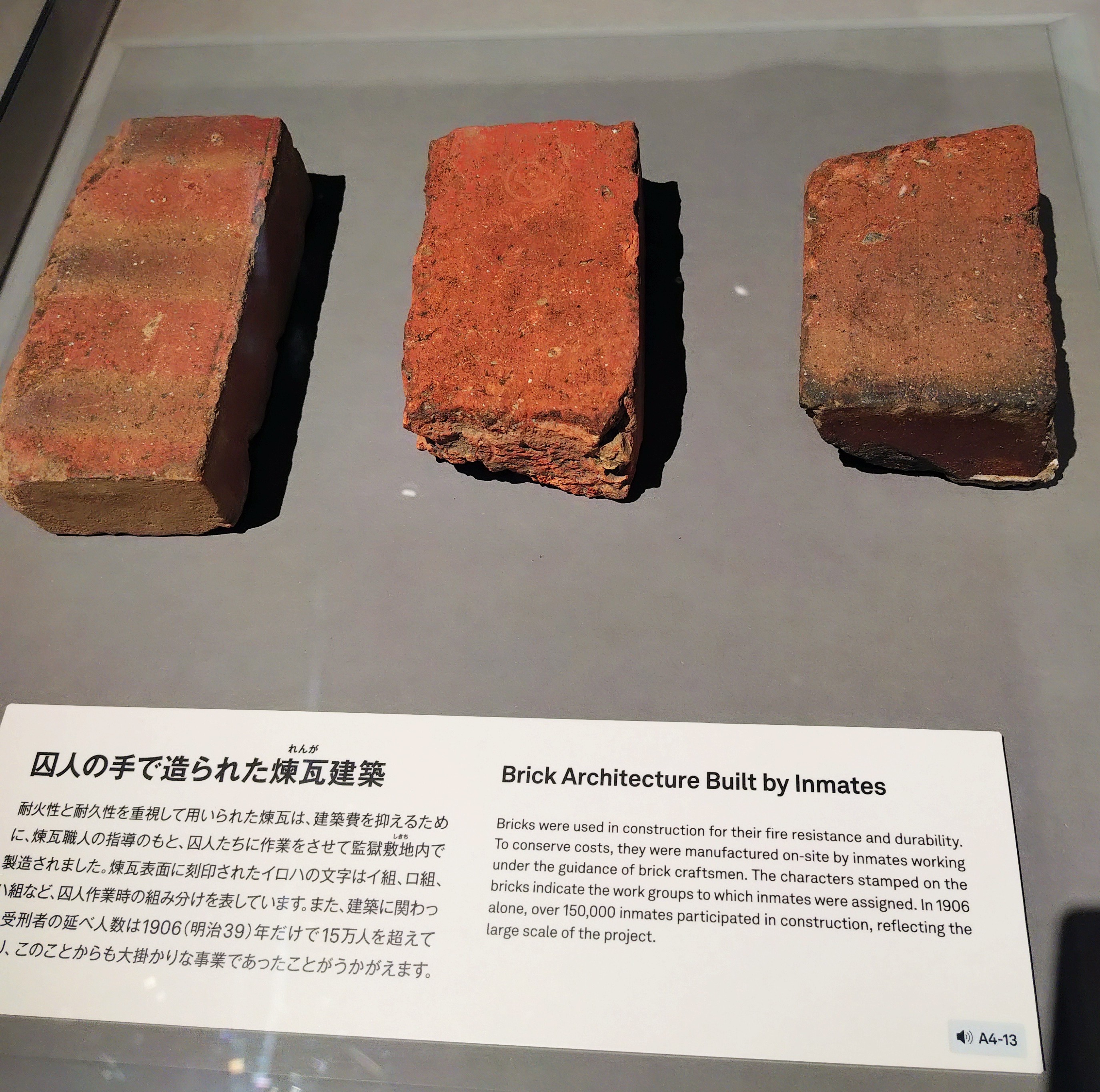
…..and possibilities for vocational training and schooling as well as labor (even the bricks this prison is made of were manufactured by inmates!)
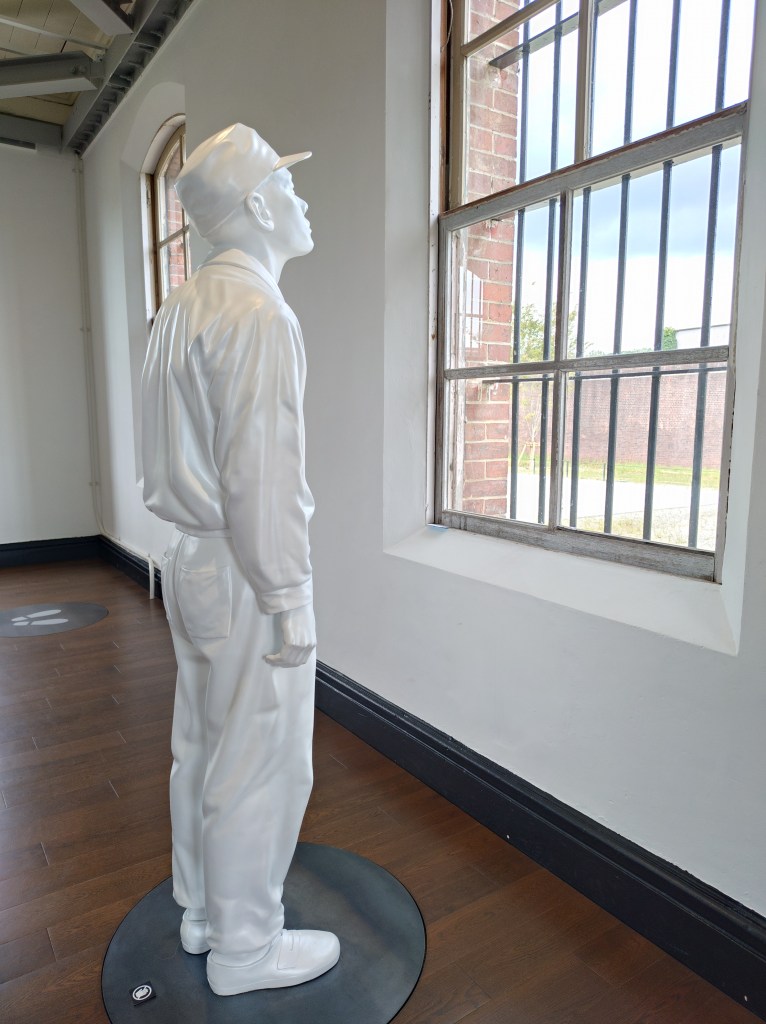
…..and of course the theme of the museum: what is freedom?
While it’s already quite depressing imagining life like that, what was most shocking was the short video available to see about prison life. Although it can be imagined that everything is regulated, the military style of everything was appalling: standing at attention in lines, marching, being barked at by supervising guards, not being able to commence a task before being given the command to do so etc.
Still, it’s a big step forward from feudal Japan up to the 19th century.
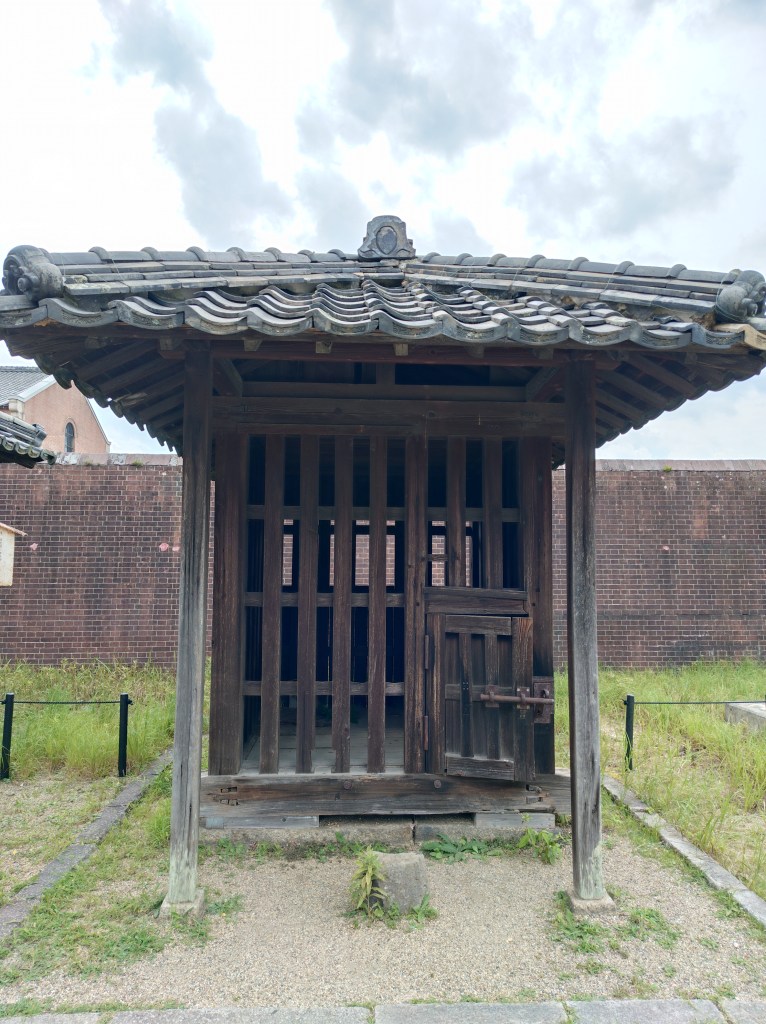
Prisoners were put in so-called “cricket cages”. Brutal Torture and punishments were common as people could only be convicted if they confessed, even if there was proof of their crimes. So the authorities did everything possible to get a confession, resulting of course in many false confessions and convictions (the same can be said of the Inquisition in Europe). Seppuku, suicide by sword for the samurai, was considered an honor.
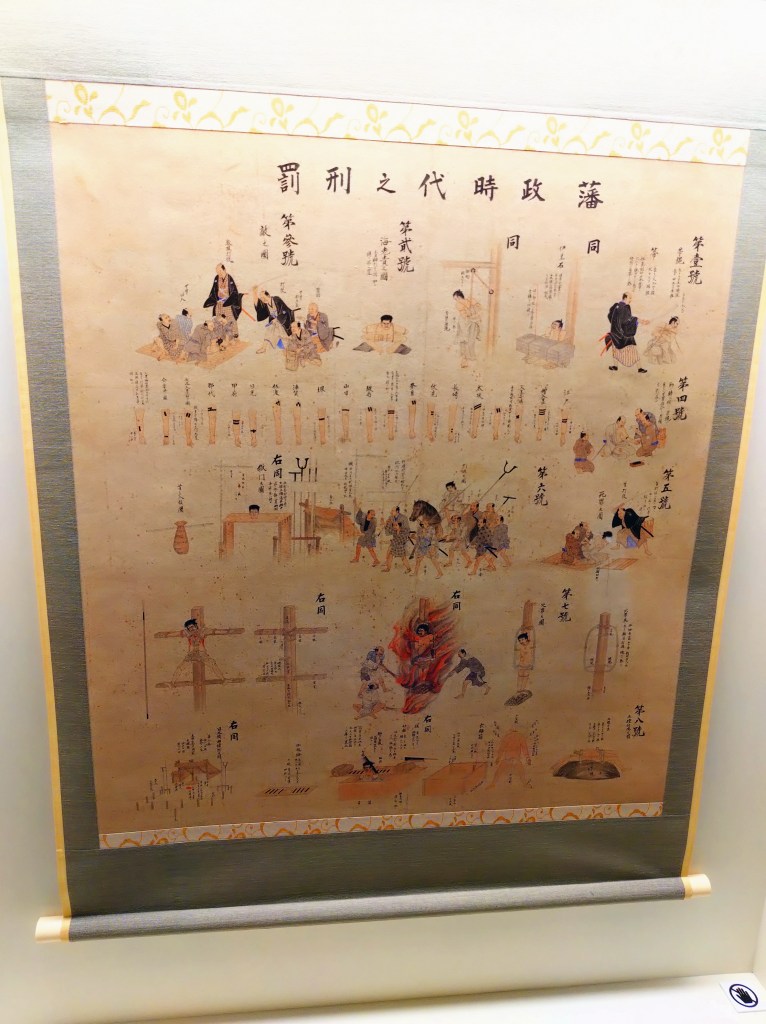
There was a special police called “Arson and Theft Investigation Unit”. This indicates the main crimes back then: Starting a fire to be then able to loot the buildings. As the houses in Japan were built with wood, whole neighborhoods fell victim to such fires. Of course there was also the common robbery including the slaying of all the unlucky inhabitants. Common punishments included beheading and then showing off the severed head, banishment to some remote island, crucifixion, burning at the stake and such (in use all over the world…). Furthermore all convicts were tattooed, so they remained easily identifiable as offenders.
Some people were different, though. Ooka Tadasuke, a high-ranking official and city magistrate, refused to use torture to extract confessions. He apparently also overturned a ruling after finding evidence of the accused’s innocence and punished the police instead for using excessive force.
Another memorable person was Hasegawa Heizo, chief of the “Arson and heft Investigation Unit” in the 18th century.
As he spent many years among common people, he realized that poverty led to many crimes. He treated criminals as human beings and set up a facility where convicts could train in all kinds of jobs so that they would be able to make a living after going back to society.
A very modern approach, we could say.
 a Gaijin in Nippon